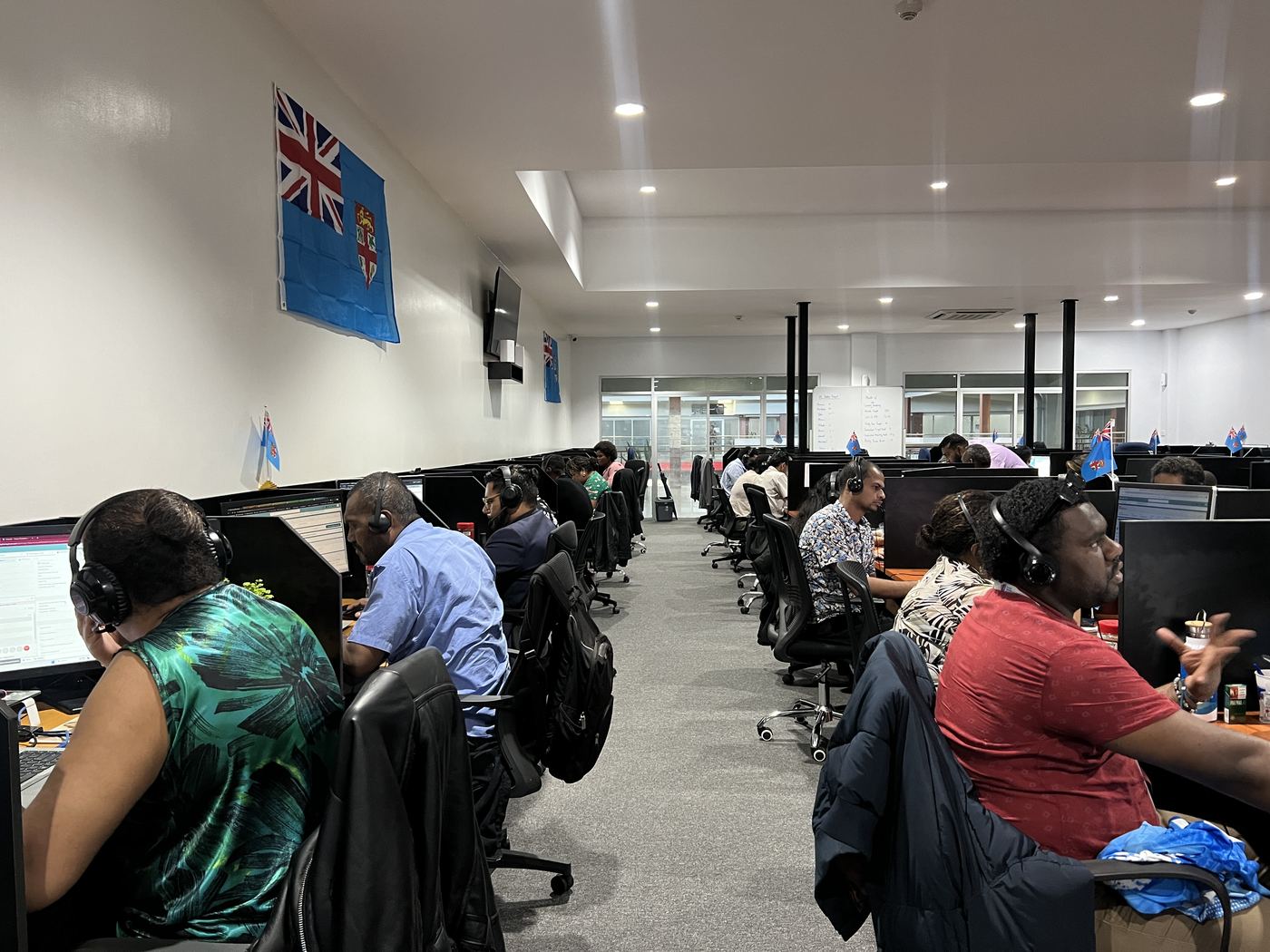
By the PCS team
A business is ready to outsource when it has repetitive, documented work, enough volume to fill a role, and capacity constraints it cannot hire its way out of locally. The five signs are a team drowning in repetitive work, local hiring that is too slow or expensive, documented processes, turning work away, and wanting to grow without growing costs at the same rate.
Introduction
Outsourcing is not for every business at every stage. It works brilliantly when the timing is right and falls flat when it is not. The challenge is knowing which situation you are in.
Over the years, we have spoken with hundreds of NZ businesses exploring offshore staffing. Some are ready. Some are not. And the difference usually has nothing to do with company size or industry. It comes down to whether you have the right conditions in place.
Here are five reliable signs that your business is ready to outsource, along with a quick self-assessment to help you decide.
Sign 1: Your Team Is Drowning in Repetitive Work
Look at how your highest-paid, most skilled people spend their time. If your accountants are spending hours on data entry, if your sales team is bogged down in CRM admin, or if your customer service manager is personally answering routine queries because there is nobody else to do it, you have a classic outsourcing opportunity.
Repetitive, process-driven tasks are ideal for offshore staffing. They can be documented, trained, and quality-checked relatively easily. And by moving them offshore, you free up your local team to focus on the higher-value work that actually drives your business forward.
The tell-tale symptoms:
- Senior staff regularly working on tasks below their skill level
- Backlogs building up in administrative or processing work
- Your team frequently working overtime just to keep up with routine tasks
- Quality dropping because people are rushing through high-volume work
If this sounds familiar, you are ready.
Sign 2: Hiring Locally Is Too Expensive or Too Slow
New Zealand has a tight labour market, and certain roles are genuinely hard to fill. If you have been advertising for months, if the salary expectations for the role keep climbing beyond your budget, or if you are losing candidates to bigger companies with deeper pockets, outsourcing can solve the problem.
This is especially true for roles like customer service agents, bookkeepers, data processors, and IT support staff, where the skills are readily available in Fiji at a fraction of the NZ cost.
It is also true for businesses experiencing growth. If you need five more staff members but cannot justify the cost of five NZ salaries, offshore staffing lets you scale at a price point that actually works.
The tell-tale symptoms:
- Job ads running for weeks with few quality applicants
- Salary expectations higher than the role can justify in your business model
- You need to grow your team but the numbers do not work with local salaries
- High turnover because you cannot compete with larger employers on compensation
Sign 3: You Have Documented Processes (or Are Willing to Create Them)
This is the sign that separates businesses that succeed with outsourcing from those that struggle. If your work processes exist only in people's heads, outsourcing will be frustrating. Your offshore team will not know what to do, quality will be inconsistent, and you will spend more time managing than you save.
But here is the thing: you do not need perfect documentation before you start. You just need a willingness to document. Many of our clients create their process documentation during the onboarding period, with our help. The act of preparing for outsourcing forces you to clarify and improve your processes, which benefits your entire business, not just the offshore team.
The tell-tale symptoms:
- You can describe how a task should be done, even if it is not written down yet
- You have quality standards in mind, even if they are informal
- You are willing to invest a few weeks in creating training materials
- You understand that clear processes lead to consistent outcomes
If you have processes or are ready to build them, you are ready.
Sign 4: You Are Turning Down Work or Losing Customers
This is often the trigger that finally pushes businesses toward outsourcing. You are at capacity. Customer response times are slipping. You are saying no to new business because you do not have the bandwidth to take it on. Or worse, you are losing existing customers because the service level has dropped.
This is a painful position to be in, because every day you delay costs you revenue and reputation. Outsourcing can provide the additional capacity you need within a few weeks, far faster than a domestic recruitment process.
The tell-tale symptoms:
- Customer complaints about response times or service quality
- Declining customer satisfaction scores
- Turning down new projects or clients because you cannot handle the workload
- Revenue growth has stalled because your team is at capacity
Sign 5: You Want to Grow Without Proportionally Growing Costs
For many NZ businesses, the economics of growth are challenging. Every additional customer requires more support. Every new product line needs more admin. If your cost base grows at the same rate as your revenue, your margins stay flat no matter how much you grow.
Outsourcing breaks this pattern. By delivering operational capacity at 40 to 60 percent lower cost, it allows you to scale your team and handle more business without proportionally increasing your overhead. This is the strategic argument for outsourcing, and it is the one that resonates most strongly with business owners who are thinking about long-term growth.
The tell-tale symptoms:
- Your margins are not improving despite revenue growth
- You want to invest in sales and marketing but need to free up budget
- You are looking at your business model and wondering how to make growth profitable
- Competitors seem to be doing more with less
Quick Self-Assessment
Score yourself on each of the following statements. Give yourself 2 points for "strongly agree," 1 point for "somewhat agree," and 0 for "disagree."
- We have roles that involve repetitive, process-driven work.
- Our senior staff regularly spend time on tasks below their skill level.
- Hiring locally for these roles is difficult, slow, or expensive.
- We have documented processes or are willing to create them.
- Our team is at or near capacity.
- Customer service or response times have declined.
- We need to grow our team but the cost of local hiring is prohibitive.
- We are comfortable managing team members remotely.
- We are looking for a long-term solution, not a quick fix.
- Data security is important to us, and we expect our partners to be certified.
Score 14-20: You are very ready to outsource. The conditions are right, and you are likely to see strong results.
Score 8-13: You are approaching readiness. There may be a few areas to address first, but outsourcing is worth exploring seriously.
Score 0-7: You may not be ready yet. Focus on building processes and clarifying your needs before engaging an outsourcing partner.
What If You Are Not Ready Yet?
That is perfectly fine. Outsourcing is not a now-or-never decision. If you scored lower on the self-assessment, the most productive next step is to start documenting your key processes and identifying which roles could eventually be outsourced. When the time is right, you will be prepared to move quickly and get better results.
Taking the Next Step
If you recognised your business in three or more of these signs, it is worth having a conversation about what outsourcing could look like for your situation. At Proficient Customer Solutions (PCS), we work with NZ businesses at all stages of their outsourcing journey, from initial exploration through to managing established offshore teams. There is no commitment required to have a discussion, and we will be straightforward about whether we think outsourcing is right for you.
Frequently asked questions
How do I know if my business is ready to outsource?
Five signs point to readiness: your team is drowning in repetitive work; hiring locally is too expensive or too slow; you have documented processes or are willing to create them; you are turning down work or losing customers through lack of capacity; and you want to grow without growing costs at the same rate.
Do I need documented processes before I outsource?
You need them documented, or you need to be willing to document them. Writing a process down is what makes it transferable. Businesses that skip this step are usually the ones that conclude outsourcing does not work for them.
What if we are not ready yet?
That is fine, and outsourcing is not a now-or-never decision. The most productive next step is to start documenting your key processes and identifying which roles could eventually move. When the timing is right you will be able to move quickly and get better results.
Is my business too small to outsource?
Size matters less than whether the work is repeatable and there is enough of it. If one person's worth of documented, process-driven work exists, there is something to outsource. Start with a single role rather than a team.